
The Cost of Stewardship | 051626
- Jun 18
- 5 min read
Updated: Jul 11

For years, I thought stewardship was one of those words that sounded noble from a distance.
Responsible. Virtuous. The kind of word people use in church or write into mission statements.
What I did not fully understand was that stewardship has a cost.
A real one.
Because stewardship is not just a belief. It is not admiration for a good principle. It is responsibility expressed in action. It requires honesty, discipline, and a willingness to confront realities you would rather avoid.
I learned that in a way I will not forget.
The lump
A while back, I found a lump.
Maybe it was nothing. Maybe it was not. I did not know.
But once I found it, I could not stop thinking about it.
The mind has a way of filling in blanks, and fear is usually eager to do the writing. In a matter of moments, my thoughts were no longer about training, body composition, or performance. They were about my wife, my children, and the future. They were about how quickly life can start to feel fragile when you are confronted with the possibility that something may be wrong.
For the first time in a long time, I was not thinking about how I looked.
I was thinking about responsibility.
The fear underneath the fear
Most people think they are afraid of dying.
Sometimes that is true.
But I think many people are just as afraid of what they might leave behind - unfinished responsibilities, burdens shifted onto the people they love, and the possibility of becoming a problem for the very people they have spent their lives trying to protect.
Those thoughts hit differently when you are a husband and a father.
When people depend on you, health stops being theoretical. It stops being a self-improvement project. It becomes painfully practical.
That is what stewardship started to mean to me in a deeper way.
Warnings we hear but do not answer
Years before that moment, my doctor had already warned me.
If I stayed on the path I was on, things were not likely to end well. I was carrying too much weight, and my health was moving in the wrong direction.
The warning was not dramatic.
It was simply honest.
But honesty does not always create change the moment it is heard. Sometimes we hear the truth long before we are ready to respond to it. Sometimes life has to press on the same place more than once before we finally pay attention.
That was true for me.
Neglect compounds too
One of the hardest lessons I have learned is that neglect compounds just as surely as discipline does.
The body does not respond to intention. It responds to action. It responds to habits, patterns, standards, and repeated choices.
When I was at my heaviest, tying my shoes left me winded. I snored constantly. Simple tasks felt harder than they should have. Looking back, I was not just carrying extra weight.
I was carrying the accumulated cost of neglected stewardship.
That is the thing about neglect: the bill often arrives slowly, but it still arrives.
The prayer
The night after finding that lump, I prayed.
Not for guarantees. Not for certainty. Not even for a particular outcome.
I prayed for strength.
Strength to face whatever came next. Strength to be honest. Strength to make changes where changes were needed.
That is what stewardship often requires.
Not perfection.
Courage.
The courage to look clearly at reality and stop asking comfort to tell you the truth.
Stewardship is expensive
Most people hear the word stewardship and think in terms of addition - more workouts, more discipline, more structure, more effort.
Sometimes stewardship does look like that.
But sometimes stewardship looks like subtraction.
Removing habits that are damaging you. Removing excuses that are protecting your comfort. Removing distractions that quietly keep costing you the life you say you want to build.
For me, stewardship meant taking a hard look at choices that were no longer serving the life I had been entrusted with.
Not because someone else demanded it.
Because I knew I owed more to the people who depended on me.
Your health is not only about you
One of the clearest realizations from that season was that my health was never only about me.
It affected my wife. My children. My future. My ability to serve, to lead, to stay present, and to remain capable over the long haul.
That is why stewardship is not selfish.
It is relational.
The better we care for what has been entrusted to us, the more capable we become of caring for the people who have been entrusted to us as well.
That is why health matters.
Not because appearance matters most.
Because people do.
What stewardship really is
I have come to believe stewardship is simply this:
taking responsibility for what God has placed in your care.
Your body. Your faith. Your family. Your time. Your opportunities. Your influence.
None of those things is guaranteed. None of them lasts forever. That is exactly why they deserve attention, effort, and gratitude expressed through action.
Stewardship is not about obsession.
It is about honor.
The cost is worth paying
Stewardship costs something.
It costs comfort. It costs convenience. It costs excuses. It costs the easier path.
But neglect costs something too.
And in my experience, neglect usually costs more.
The discomfort of discipline is temporary. The consequences of neglect have a way of lingering - in your body, in your capacity, in your energy, and sometimes in the lives of the people who depend on you.
That is why stewardship matters.
Not because it is easy.
Because it is worth it.
Final
The lump turned out to be nothing serious, and for that I am deeply grateful.
But the lesson stayed.
Sometimes life gives you a moment that forces clarity - a moment that reminds you what matters, who depends on you, and how quickly comfort can stop looking harmless.
Stewardship is not about perfection.
It is about honoring responsibility while you still have the chance.
One habit at a time. One decision at a time. One day at a time.
Take care of what you have been given.
Because neglect has a cost too.
And only one of those costs moves you toward the life you are supposed to build.
Because meaningful things are not found.
They are built.
And the work continues.
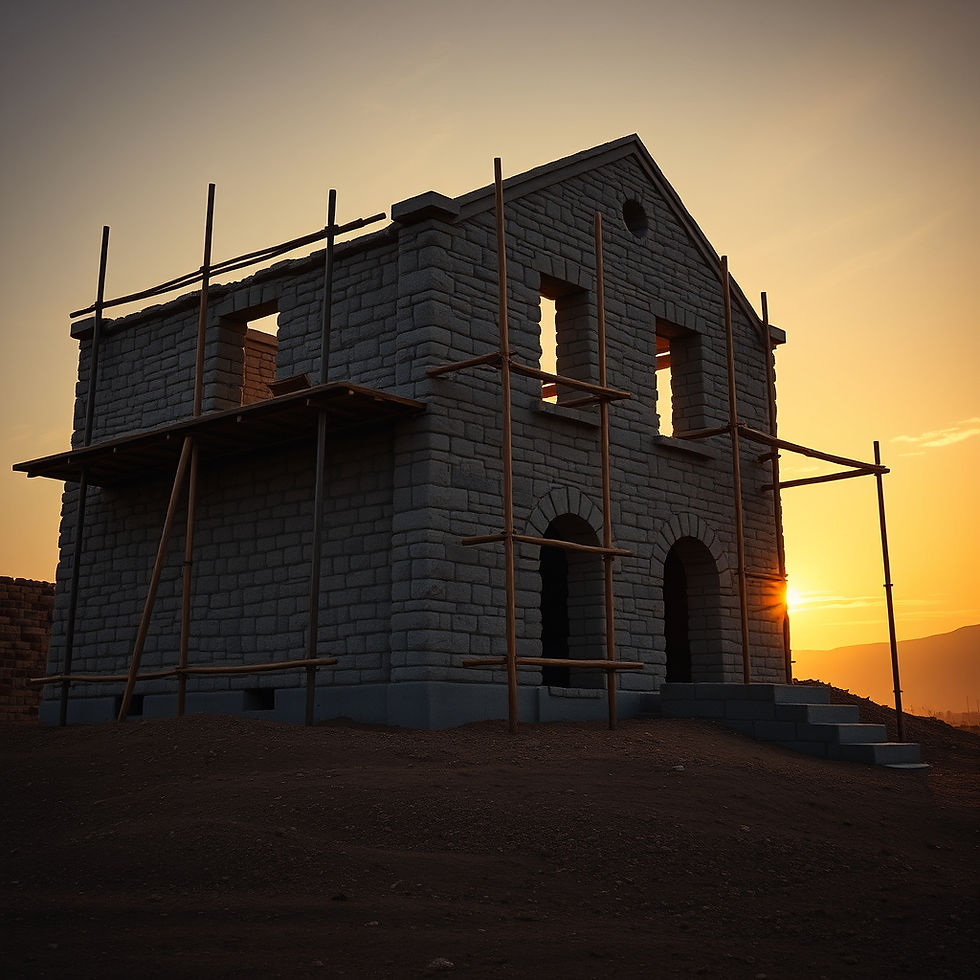
If you've made it this far, thank you for reading. Temple Built isn't just a building I'm trying to open—it's a community I'm hoping to build. If this vision resonates with you, I'd love to stay connected.
Help Build Temple Built
Join the Founding 50 Interest List to receive behind-the-scenes updates, facility progress, early event invitations, and priority access when memberships become available.
No payment. No obligation. Just let us know you're interested.


Comments